
The trusted marketplace for Industrial Parts and Consumables
Select language
Sold more then 10.000 Industrial Parts and Consumables
Sell quicker! List items quicker and globally!
2 Year Warranty on all items


Pneumatics is a branch of engineering that deals with the use of compressed air or gas to perform work. It is widely used in various applications, including manufacturing, automation, and transportation. Here are some key aspects of pneumatics:
Basic Principles
1. Compressed Air: Pneumatic systems use compressed air as a power source. The air is stored in a tank and released through valves to perform work.
2. Pressure: The effectiveness of a pneumatic system is largely dependent on the pressure of the compressed air. Higher pressure can produce more force.
3. Flow Control: The flow of air is controlled using valves, which can be manually operated or automated.
Components of Pneumatic Systems
1. Compressor: A device that compresses air and stores it in a tank.
2. Actuators: Devices that convert the energy of compressed air into mechanical motion.
Common types include cylinders (linear motion) and rotary actuators.
3. Valves: Control the flow and direction of air within the system. Types include directional control valves, flow control valves, and pressure relief valves.
4. Filters and Regulators: Ensure that the air is clean and at the correct pressure before it enters the system.
5. Hoses and Fittings: Connect various components of the pneumatic system and transport compressed air.
Applications
- Manufacturing: Used in assembly lines, material handling, and packaging.
- Automation: Common in robotics and automated machinery for tasks like gripping and moving objects.
- Transportation: Used in systems like air brakes in vehicles and pneumatic suspension systems.
- Medical Equipment: Utilized in devices such as dental drills and respiratory equipment.
Pneumatics Manufacturers

Festo
Festo is a global leader in automation technology and industrial training, renowned for its innovati
Filter
Main Categories
Categories
Sub Categories
Year of Construction
Manufacturers
Models
Locations
Condition
Serialnumber
Pressure min
Pressure max
Type
Temperature
Sort on
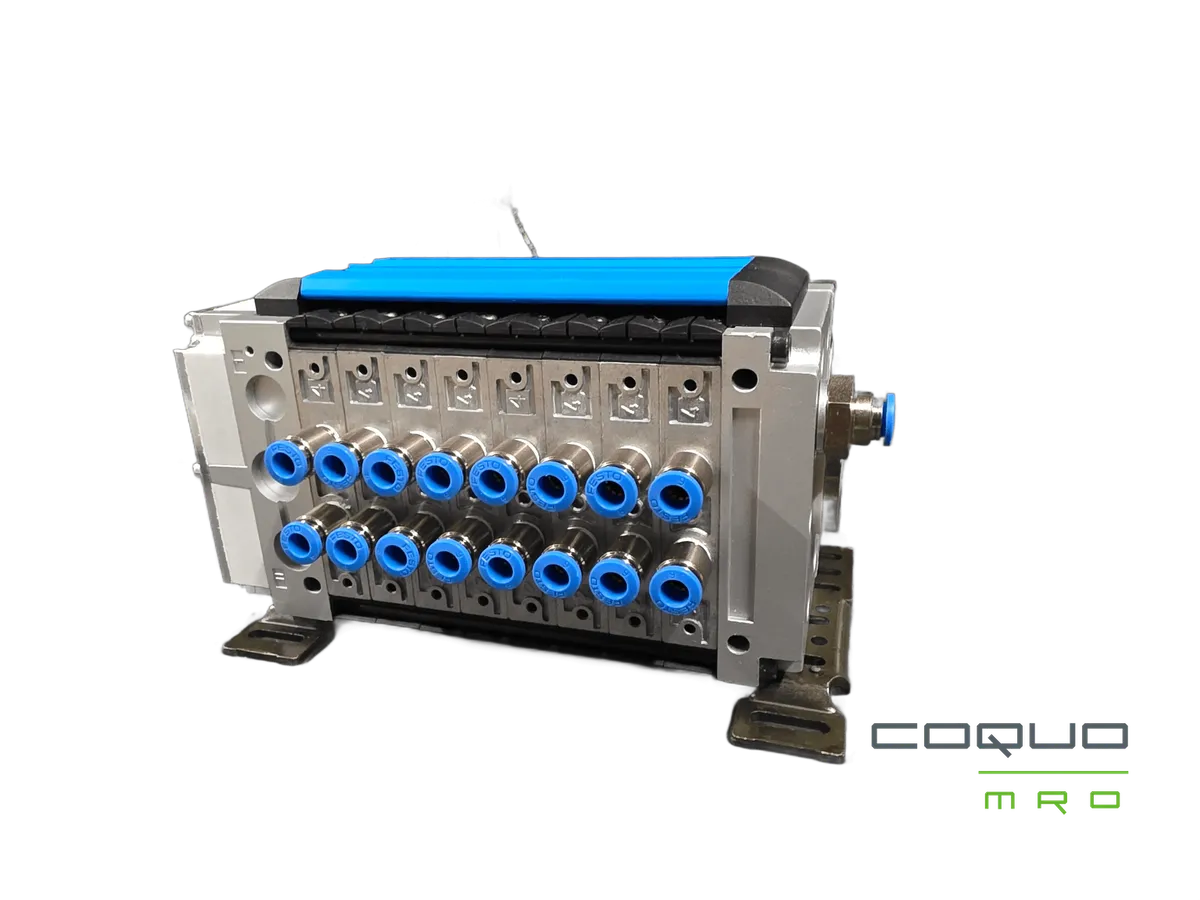
BG(123624) PN 064067 CE CPV14-GE-MP-8 18265 N807 HW 01.00 SW FESTO CPV 14-VI 18210 1=-0,9...10 bar 14-3,0... 8 bar US Sf 13° C Only for Connection to Class 2 supply
Festo - CPV14-GE-MP-8€399.00


