
The trusted marketplace for Industrial Parts and Consumables
Select language
Sold more then 10.000 Industrial Parts and Consumables
Sell quicker! List items quicker and globally!
2 Year Warranty on all items


Industrial electronic level regulators are devices used to maintain the desired level of liquids or solids in various industrial processes. These regulators are crucial in applications such as water treatment, chemical processing, food and beverage production, and many others where precise level control is necessary to ensure safety, efficiency, and product quality.
Key Features of Industrial Electronic Level Regulators:
1. Measurement Technology:
- Ultrasonic Sensors: Use sound waves to measure the distance to the liquid surface.
- Capacitive Sensors: Measure changes in capacitance caused by the presence of a liquid.
- Radar Sensors: Use microwave radar technology to measure levels, suitable for high-temperature and high-pressure environments.
- Pressure Sensors: Measure the hydrostatic pressure exerted by the liquid column to determine the level.
2. Control Mechanisms:
- On/Off Control: Simple control that turns pumps or valves on or off based on set level thresholds.
- Proportional Control: Adjusts the output based on the difference between the actual level and the setpoint.
- PID Control: Combines proportional, integral, and derivative control for more precise level management.
3. Output Options:
- Analog Outputs: 4-20 mA or 0-10 V signals for integration with other control systems.
- Digital Outputs: Communication protocols like Modbus, Profibus, or Ethernet for integration into industrial networks.
4. User Interface:
- Display: LCD or LED screens for real-time level monitoring.
- Programming: User-friendly interfaces for setting parameters, alarms, and calibration.
5. Alarms and Notifications:
- Built-in alarms for high or low-level conditions to prevent overflow or dry running of pumps.
6. Environmental Considerations:
- Designed to withstand harsh industrial environments, including temperature extremes, humidity, and corrosive substances.
7. Power Supply:
- Can operate on various power supplies, including AC and DC, with options for battery backup in critical applications.
### Applications:
- Water and Wastewater Treatment: Maintaining levels in tanks and basins to ensure proper treatment processes.
- Chemical Processing: Controlling levels in reactors, storage tanks, and mixing vessels.
- Food and Beverage Industry: Ensuring consistent levels in fermentation tanks, storage silos, and bottling lines.
- Pharmaceuticals: Precise level control in production processes to meet stringent regulatory standards.
### Benefits:
- Increased Efficiency: Optimizes the use of resources and reduces waste.
- Safety: Prevents overflows and dry running, reducing the risk of accidents.
- Quality Control: Maintains consistent product quality by ensuring proper levels during processing.
- Automation: Integrates with other control systems for automated operations.
Industrial Electronic Level Regulators Manufacturers

Henry Technologies
Henry Technologies is a leading manufacturer specializing in industrial electronic level regulators,
Filter
Main Categories
Categories
Sub Categories
Year of Construction
Manufacturers
Models
Locations
Condition
Sort on
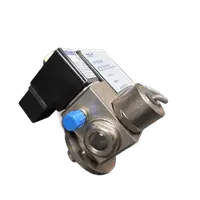
CE MODEL DATE CODE OP OT KOOS SUPPLY 24V FREQ 50-60Hz CURRENT 0.5 Amp MWP 35 Barg MOPD 24 Barg IEC Protection Class, IP41
Henry Technologies - 3209€1,000.00


